
How to get a local phone number for another country (without moving there)
Want customers in another country to actually call you? Learn how to get a local number there in three simple steps, with no office, no move and no paperwork surprises.
Here's a situation you might know well. Your team works from one city, but some of your best new customers are in a country you've never visited. They find your website, see an international number, and hesitate. Calling abroad feels expensive and a little risky, so many of them send an email instead, or don't get in touch at all.
A local phone number fixes that. Your customers dial a number that looks familiar, pay their normal local rate, and reach your team just like they'd reach a business down the street. You get a presence in a new market without renting an office, hiring locally or moving anyone.
Every country runs its own numbering plan inside the ITU's global E.164 numbering system. That's why the format, the area codes and the paperwork change from one country to the next. You can look up any country's official plan on the ITU's national numbering plans page before you start.
In this guide, you'll learn:
- What a local number in another country really is, and why it helps
- Whether you need an office, an address or a local company
- How to get a local phone number for another country in three steps
- How calls reach your team across time zones, and how outbound calls work
- What it costs, and how many countries to start with
What is a local number in another country?
A local number in another country is a phone number with that country's code and a local area code, owned by your business even though your team is somewhere else. To callers there, it looks and works like any local business line.
The trick is that the number isn't tied to a phone line on a wall. It lives in the cloud, so when someone dials it, your phone system sends the call to wherever your team signs in: a browser tab, a mobile app or a desk phone. The caller pays a local rate. Your team never has to know where the call came from unless they look.
If you want a refresher on how local numbers work in general, our guide to what local phone numbers are covers the basics.
Why should you get a local number in another country?
A local number in another country makes it easier and cheaper for customers there to call you, and it makes your business feel closer to them. Here's what changes when you add one:
- More people call: a familiar local number removes the fear of an expensive international call.
- You look like you belong: a local number feels like a business that serves that market, not one that's far away.
- Your outbound calls get answered: people are more likely to pick up a number from their own region.
- You can test a new market cheaply: see if real demand exists before you hire or open an office.
- You can support customers properly: give each market a clear number for help, not just an email form.
- You can track each market: calls to each country's number show you exactly where interest is coming from.
That last point is easy to miss. When every country has its own number, your call reports quietly become a map of where demand is growing.
Do you need an office or address in that country?
You usually don't need an office in the country, but some countries ask for an address, ID or business documents before they'll give you a local number. The rules come from each country's telecom regulator, not from your provider, so they differ a lot.
These are the most common things a country might ask for:
- ID for the account owner: a passport or national ID card.
- Proof of a business: a company registration document or tax number.
- A local address: some countries only give local numbers to people or businesses with an address in that area.
- A note on how you'll use it: for example, whether the number is for sales, support or both.
How do you get a local phone number for another country?
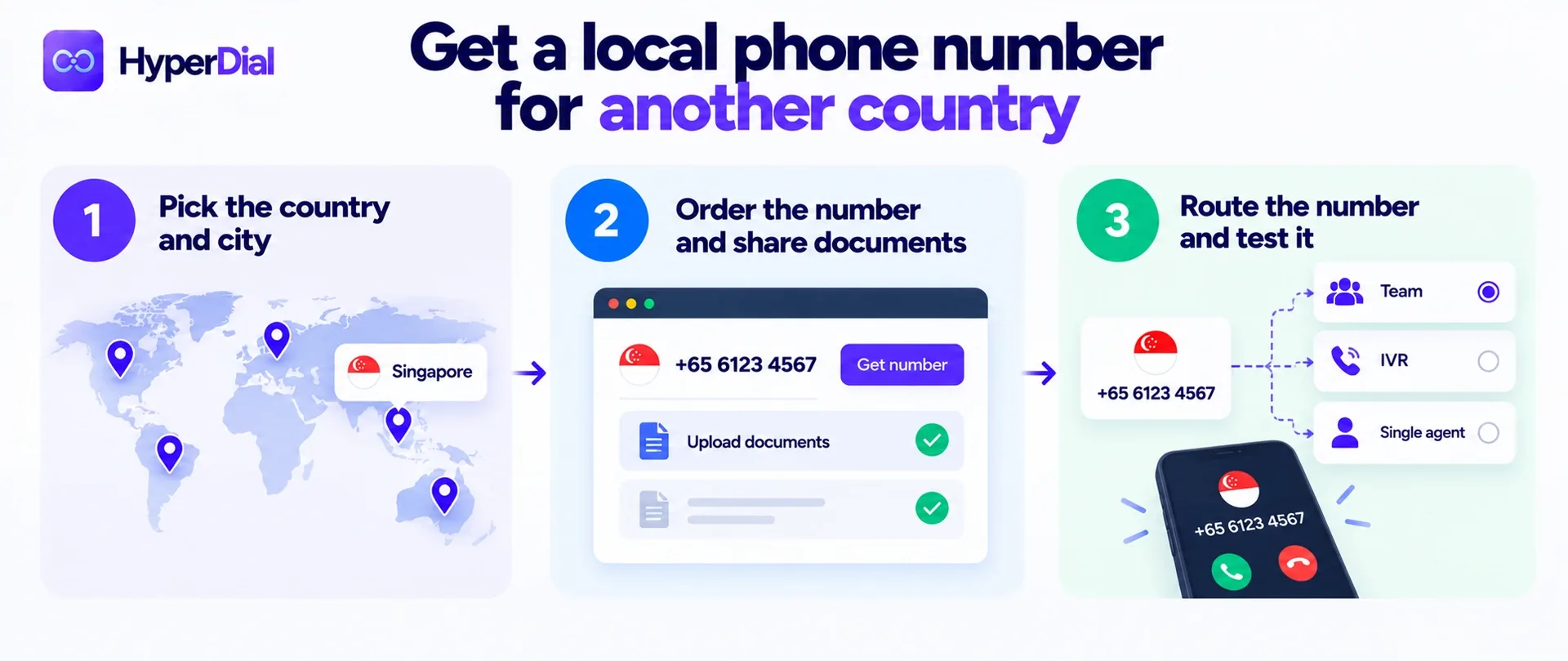
You get a local phone number for another country by choosing where you need it, ordering it from a cloud phone provider, and routing it to your team. Most numbers are ready within minutes to a few days. Follow these three steps:
- Pick the country and city. Choose the place your customers are, not where your team is. If you sell across a whole country, pick its biggest city or a number that covers the region.
- Order the number and share any documents. Check what that country needs, upload your ID or business documents, and choose a number from the list your provider offers.
- Route the number and test it. Decide who answers, set business hours for that country's time zone, and make a test call from a phone in that country if you can.
The most common mistake happens at step 2: people order the number first and only then find out the country needs paperwork they don't have ready. Check the requirements before you order, and the number can go live much faster.
What should you prepare before you order?
A little preparation saves you days of back-and-forth. Have these ready before you start:
- The country and city you want the number in.
- A scan of your ID and, if needed, your company registration.
- A business address to use if the country asks for one.
- Who should answer calls to the new number.
- Business hours in that country's local time.
How do calls reach your team if you're in a different country?
Calls to your local number travel over the internet to your phone system, which rings your team wherever they've signed in. A customer in one country can dial a local number and reach someone answering from a laptop in a completely different time zone.
The bigger question is usually time, not technology. If your team sleeps while your new market is awake, you need a plan for those hours. Here are the options most teams use:
- Set business hours per country: callers outside those hours hear a clear message instead of endless ringing.
- Route by the number dialed: calls to each country's number go to the right team or language.
- Cover gaps with a second team: a teammate in a closer time zone takes the overflow.
- Use an AI agent after hours: it answers simple questions and books callbacks until your team is back.
HyperDial's call routing can route by the number dialed, the caller's region or both, with business hours and holiday calendars per region. Its AI agent can answer calls at night and hand them to a person with the transcript attached.
Can you make outbound calls with a local number from another country?
Yes, in many countries you can call out using your local number, so the people you call see a familiar number on their screen. This is often called local presence, and it's one of the biggest reasons sales teams buy numbers abroad.
There's a catch worth knowing. Some local numbers are set up for incoming calls only, and some countries limit how a foreign business can show a local number on outgoing calls. Ask your provider whether outbound caller ID works for the exact country and number type before you rely on it. HyperDial's local presence dialing shows prospects a number from their own region automatically.
How much does a local number in another country cost?
A local number in another country usually costs a monthly fee for the number, plus the cost of the minutes your team uses. The exact price depends on the country, so compare these costs before you choose:
- The number itself: a monthly fee that changes from country to country.
- Incoming minutes: what you pay when calls ring your team over the internet.
- Outgoing minutes: what you pay when your team calls customers in that country.
- One-time setup: some countries charge a fee, or need paperwork that takes time.
- Extra numbers: each extra city or country adds its own monthly fee.
Your callers pay only their normal local rate, which is the whole point. HyperDial bills numbers and minutes at cost, with no markup, on every plan. You can compare plans on the pricing page.
How many countries should you start with?
Start with one or two countries where you already see interest, then add more once you know the numbers are working. It's tempting to buy ten numbers at once, but each one needs someone to answer it well.
A simple way to decide:
Start with one country if you're testing a new market and don't have anyone to answer calls in that time zone yet.
Add a few countries at once if you already get emails, website visits or sales from those places, and your team can cover the hours.
Use a toll-free number instead if you want one free number for a whole country and don't need a city-level presence. Our guide to toll-free numbers explains when that's the better choice.
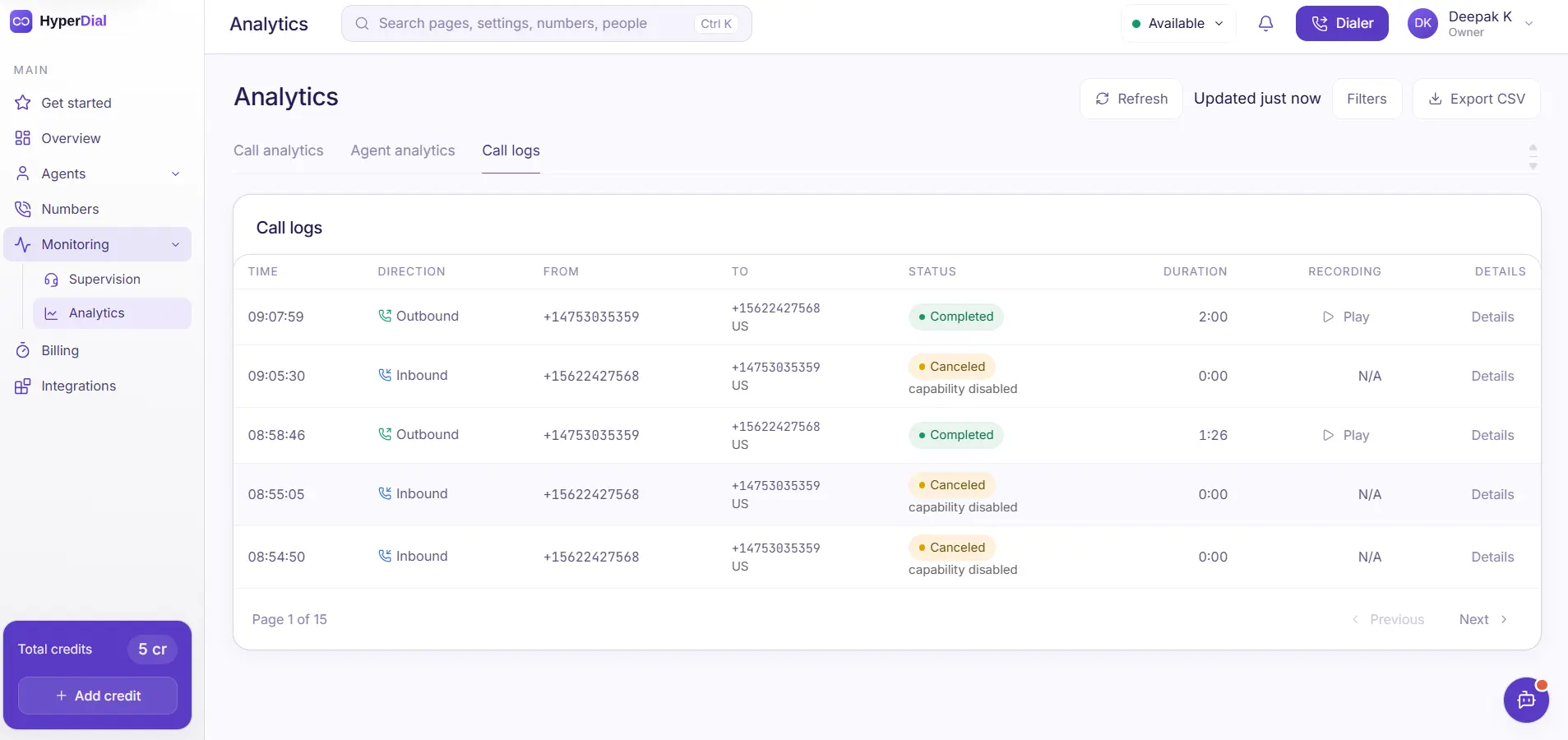
Give each new number a few months, then look at how many calls it brings in and how many turn into customers. HyperDial's call analytics shows total, answered and missed calls, so you can compare markets side by side.
How does HyperDial help you get local numbers in other countries?
HyperDial lets you add local numbers in other countries to the same phone system your team already uses, so every market rings in one place. Here's what you get:
- Numbers in 130+ countries: if a market isn't listed, HyperDial confirms what's available and what it needs.
- Help with paperwork: ID and registration steps are filed on your behalf where a country requires them.
- Ringing in your browser or app: a new business line rings alongside your personal number, not instead of it.
- Routing per country: send each number to the right team, language or after-hours path.
- Spam monitoring: HyperDial watches your numbers and warns you before one gets flagged.
- Free porting: move numbers you already have, and they keep working during the move.
There are honest limits too. Not every number type is available in every country, and markets that need ID checks can take a few days. You can see the full list of what's on offer on HyperDial's local phone numbers page.
What should you do next?
Pick the one country where you already see the most interest, and check what it needs for a local number. Get your documents ready, then order the number and route it to whoever will answer. When you're ready to add your first market, compare plans on the pricing page or try HyperDial free.
Sources


