
What are local phone numbers? A simple guide for businesses
A local phone number is a phone number with the area code of a specific city or region, like 212 for New York or 312 for Chicago. Businesses use local phone numbers so customers in that area see a familiar number, and with a virtual phone system the number can ring on any phone or laptop, wherever your team works.
What is a local phone number?
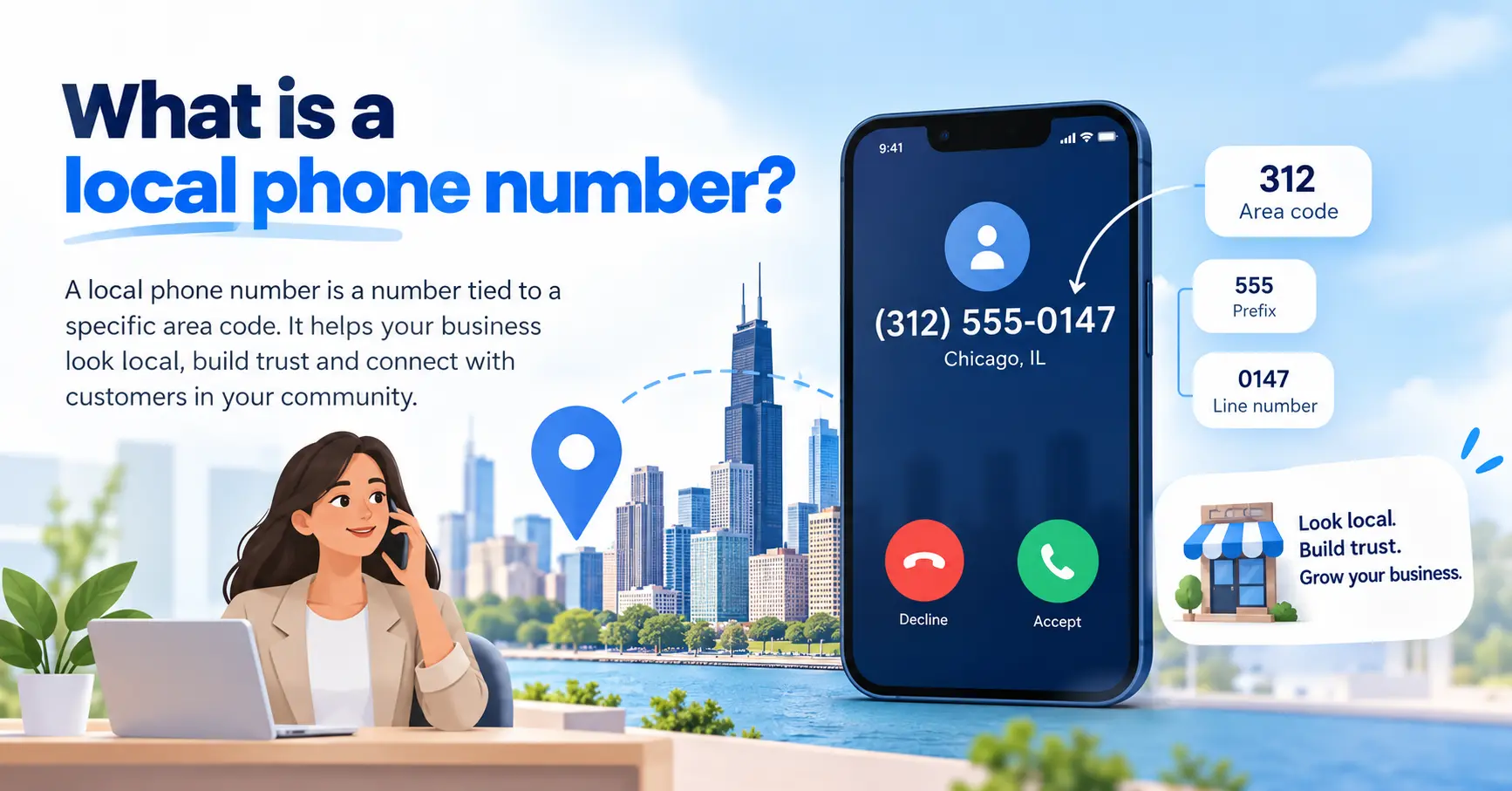
A local phone numbers are phone number tied to a geographic area through its area code. When people see the area code, they know roughly where the number is from, so a local number makes a business look like it's part of the community.
In the US, every phone number follows the North American Numbering Plan (NANP), the shared numbering system for 20 countries that use country code +1. Each number has 10 digits split into three parts:
- Area code (3 digits): the city or region, such as 212 for New York or 512 for Austin.
- Prefix (3 digits): the local exchange inside that area.
- Line number (4 digits): the unique number for one line.
So in (312) 555-0147, "312" tells callers the number belongs to Chicago. The North American Numbering Plan Administrator (NANPA) assigns these numbers in the US, following rules set by the FCC.
How do local phone numbers work?
Local phone numbers work like any other number for the caller: they dial 10 digits and the call connects. What changes is how the call reaches you.
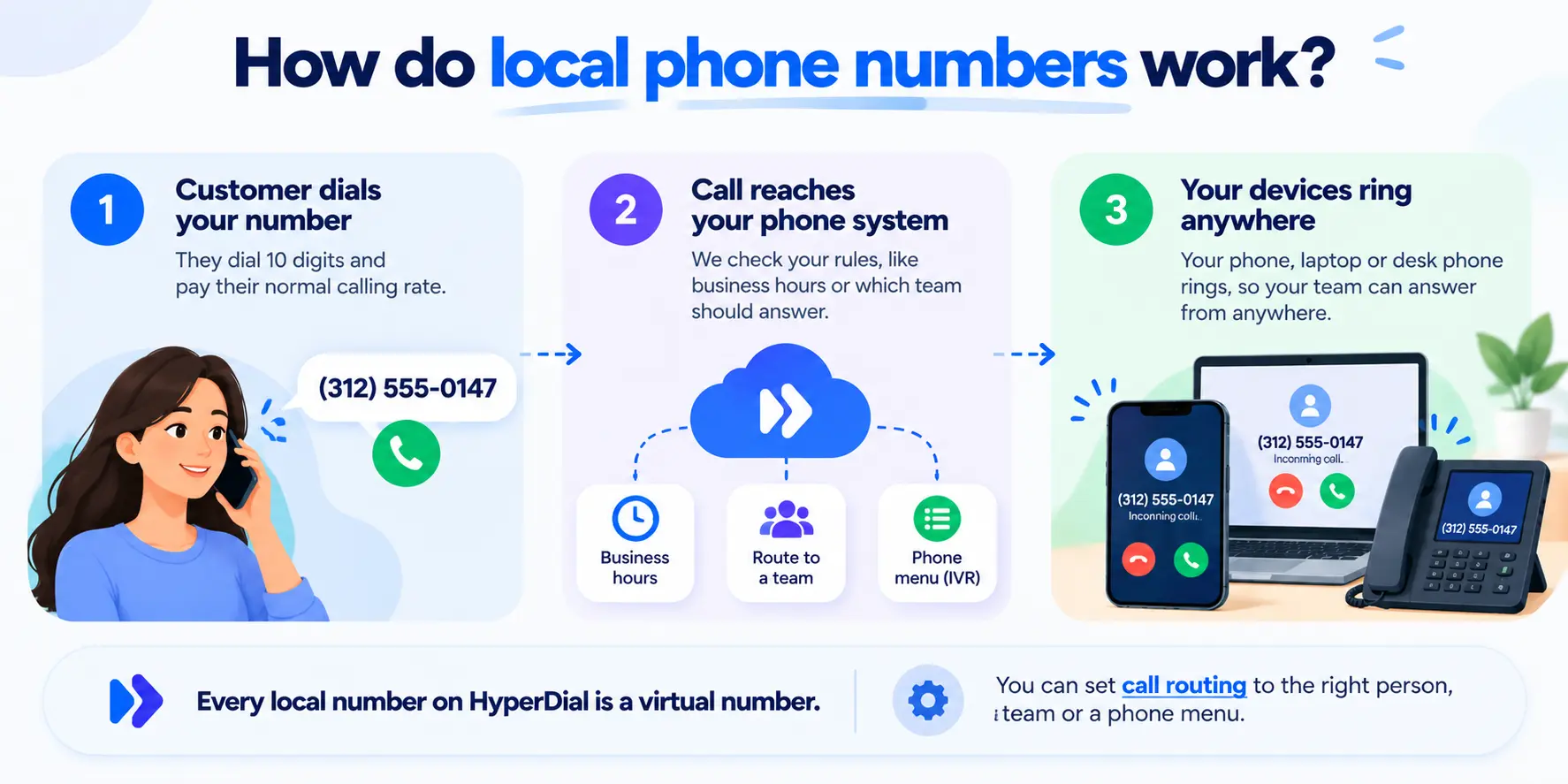
A traditional local number is wired to a desk phone at one address. By contrast, a virtual local number is held by a cloud phone system, so the call travels over the internet to whatever device you choose. Here's what happens when a customer calls a virtual local number:
- The customer dials your number and pays their normal calling rate.
- The call reaches your phone system which checks your rules, such as business hours or which team should answer.
- Your phone, laptop or desk phone rings, in any city, so your team can answer from anywhere.
Every local number on HyperDial is a virtual number. You can also set call routing so calls go to the right person, a team or a phone menu.
What types of local phone numbers are there?
There are four common types of local phone numbers, and the difference is where the number lives and how calls reach it. The table below compares them.
Table 1: Types of local phone numbers compared
| Type | Tied to | Rings on | Good for |
|---|---|---|---|
| Landline | One address | A desk phone | A single office or shop |
| Mobile | One SIM card | One cell phone | One person |
| Virtual (cloud) | Your phone system | Any phone, laptop or app | Teams and remote work |
| Local vanity | Any of the above | Depends on the type | Easy-to-remember numbers |
A local vanity number is a local number with digits that spell a word or form an easy pattern, such as a number ending in 2000. Most growing businesses pick virtual numbers, because one number can ring several people and move with the team.
What is the difference between a local and a toll-free number?
The main difference is who pays for the call. With a local number, the caller pays their usual rate. On a toll-free number, the business pays, and the call is free for the caller.
Table 2: Local vs toll-free numbers
| Local number | Toll-free number | |
|---|---|---|
| Looks like | (312) 555-0147 | (800) 555-0147 |
| Who pays for the call | The caller | The business |
| Says to customers | "We're nearby" | "We serve the whole country" |
| US prefixes | Any city area code | 800, 833, 844, 855, 866, 877, 888 |
| Best for | Local sales, outbound calls | Nationwide support lines |
Choose a local number if you serve customers in one city or region, or you make a lot of outbound calls. Choose a toll-free number if you run a support line for customers across the country. Many businesses use both on the same account.
Why do businesses use local phone numbers?
Businesses use local phone numbers to look close to their customers and to keep work calls separate from personal ones. Here are the main reasons:
- A familiar area code: people are more willing to answer a number from their own area than one they don't recognize.
- A local presence without an office: you can hold numbers in several cities and serve each one from a single team.
- A separate business line: a work number on your phone keeps your personal number private and lets you set business hours.
- Local caller ID for sales calls: with local presence dialing, your caller ID matches the area of the person you're calling.
- Room to grow: you can add numbers for new cities without new phone lines or hardware.
Does the area code have to match your business address?
No. In the US, a virtual local number can use any area code, even one where your business has no office. A company based in Dallas can have a 212 number for New York customers and a 305 number for Miami customers.
Other countries can have stricter rules. Some ask for a local address or registration documents before a number goes live. India, for example, requires KYC documents and DLT registration. HyperDial lists what each country needs on its pages for US phone numbers, UK phone numbers and India phone numbers.
Can you keep your local number if you switch providers?
Yes. Keeping your number when you switch is called porting, and US law protects it. According to the FCC's guide to number porting, you can usually keep your number if you stay in the same area, and your old company can't refuse to port it, even if you still owe them money.
The FCC requires simple ports to be processed in one business day. More complex ports, such as moving many numbers at once, can take longer. Don't cancel your old service until the port is complete, or you could lose the number.
HyperDial ports numbers for free on annual plans, and your number keeps working during the move. The number porting help guide explains the steps.
Can a local number be marked as spam?
Yes. Any number, local or toll-free, can be labeled "Spam Likely" if it makes a lot of calls in a short time or gets many complaints. Once that happens, fewer people answer.
US carriers also check caller ID with a system called STIR/SHAKEN, which the FCC requires to fight spoofed robocalls. It confirms that the number showing on caller ID is really the one making the call. To keep a local number in good standing:
- Call at a steady pace: avoid hundreds of calls an hour from one number.
- Spread calls across numbers: use several local numbers for large campaigns.
- Watch your number health: HyperDial monitors your numbers and warns you before they get flagged, so you can rotate numbers or slow down.
How do you get a local phone number for your business?
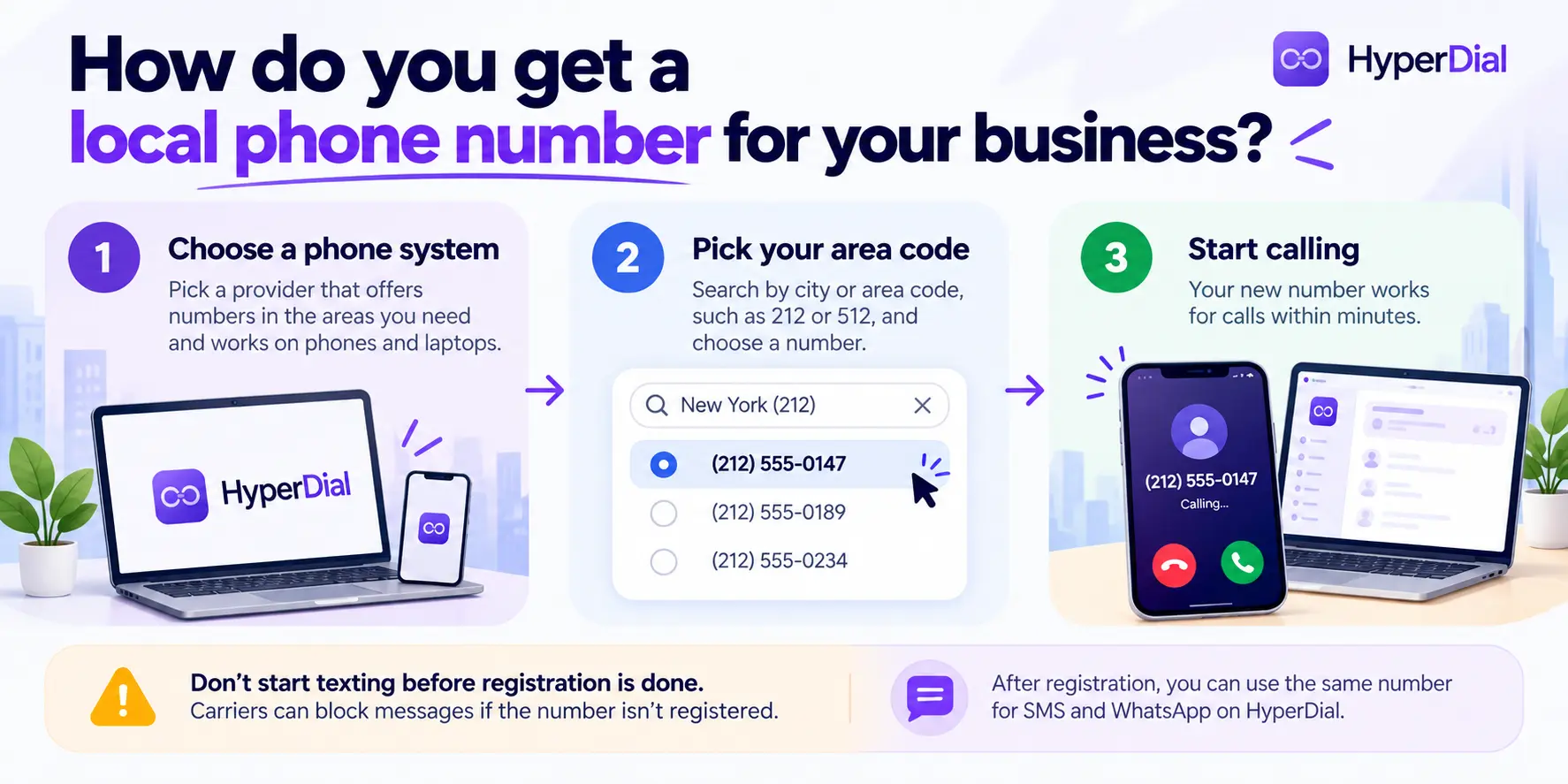
You can get a local phone number online in a few minutes through a virtual phone system. Here's how:
- Choose a phone system. Pick a provider that offers numbers in the areas you need and works on phones and laptops.
- Pick your area code. Search by city or area code, such as 212 or 512, and choose a number.
- Start calling. Numbers on HyperDial work for calls within minutes.
The most common mistake happens at step 2: teams start texting before registration is done, and carriers block the messages. HyperDial's SMS and WhatsApp messaging runs on the same number once you're registered. For a wider walkthrough, see our guide on how to get a virtual phone number.
How much does a local phone number cost?
A local phone number usually costs a few dollars a month, plus the cost of your calls and your phone system plan. Prices depend on the provider and the country.
Providers bundle numbers in different ways. Some include one number with each plan and charge for extra numbers, while others add a one-time setup fee. HyperDial Local phone number bills numbers and minutes at cost with no markup, on every plan, including the free Base plan. You can compare plans on HyperDial's pricing page.
When you compare providers, check these costs:
- The number itself: monthly fee per number.
- Setup or registration fees: one-time charges, such as texting registration.
- Calling minutes: included minutes or a per-minute rate.
- User seats: the monthly fee for each person who answers calls.


