Sampling was never a choice — it was the only thing possible. Every call scored against the approved playbook changes what a one-to-one is about: not whether a rep is doing well, but exactly where they leave the line, with the clip open.
Every call scored · Clip attached to every point

A scorecard nobody trusts is worse than no scorecard. Every line here links to the moment in the call it came from, so a one-to-one starts from evidence and not from a disagreement about what was said.
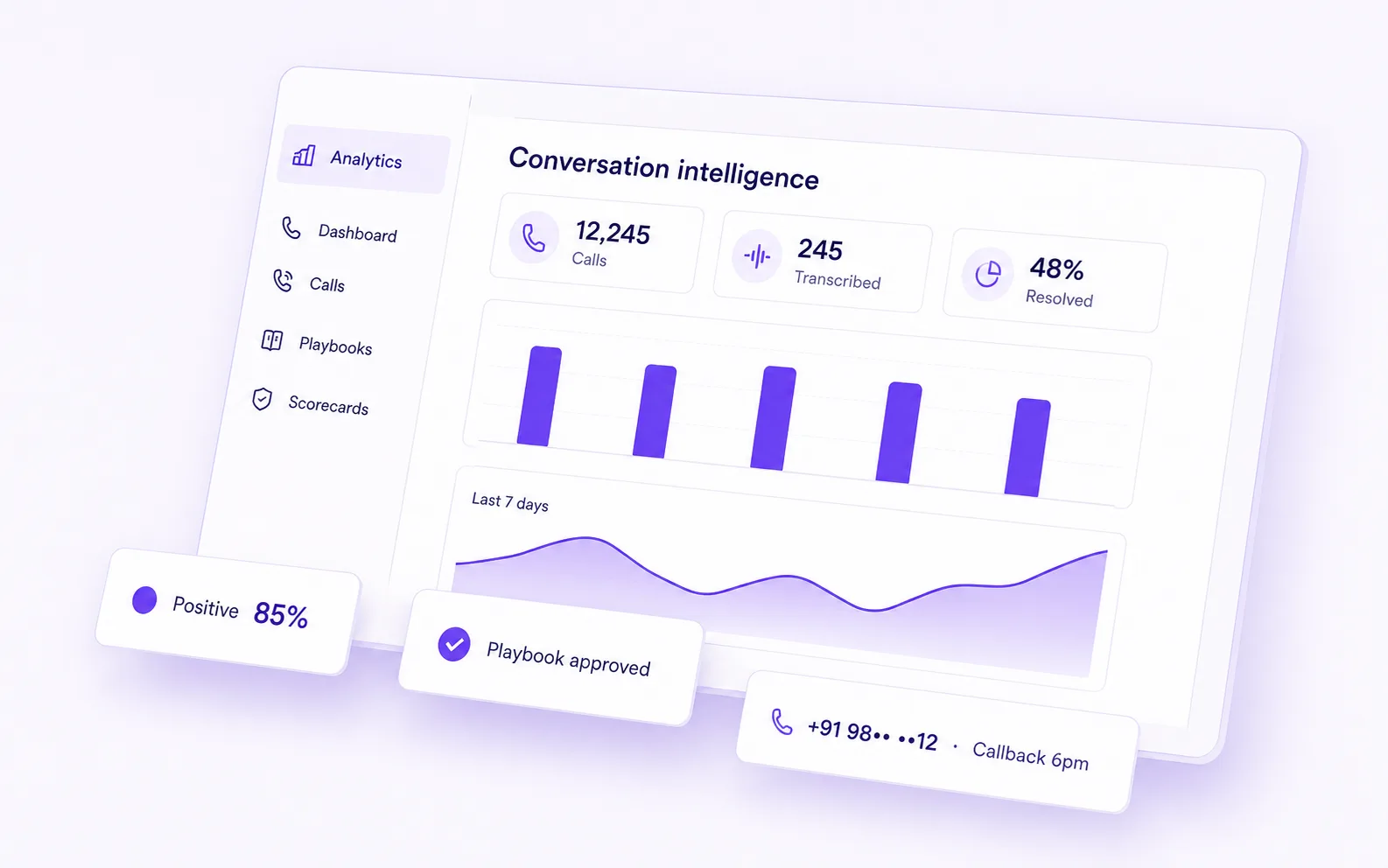
The system proposes; a manager decides. Every change is a readable diff with the evidence behind it, and every version that ever ran is traceable to the person who approved it.
None of this needs a new process. It needs the calls you are already recording to be readable.
Descriptions of how the product works, not performance claims. What it does for your numbers depends on your floor.
Yes, with the same clips attached. A score a rep cannot inspect is a score they will not trust, and a scorecard nobody trusts changes nothing.
The approved playbook is the rubric, so yes — change the playbook and scoring follows. What you cannot do is score against a standard the floor has never been shown.
Usually visible by the second week, because every call counts rather than the handful somebody found time to listen to.
It replaces sampling, not judgement. What changes is that QA spends its time on the calls that need a human opinion instead of on choosing which five to listen to.
AI communication platform that connects your calls, learns what wins, and runs across your channels.
sales@hyperdial.io