Voice agents take the calls that do not need a person — qualification, reminders, renewals, the inbound at 2am. They run an approved playbook, they hand over the moment intent gets complex, and they do not improvise.
Approval required before any play runs · Handover with full context
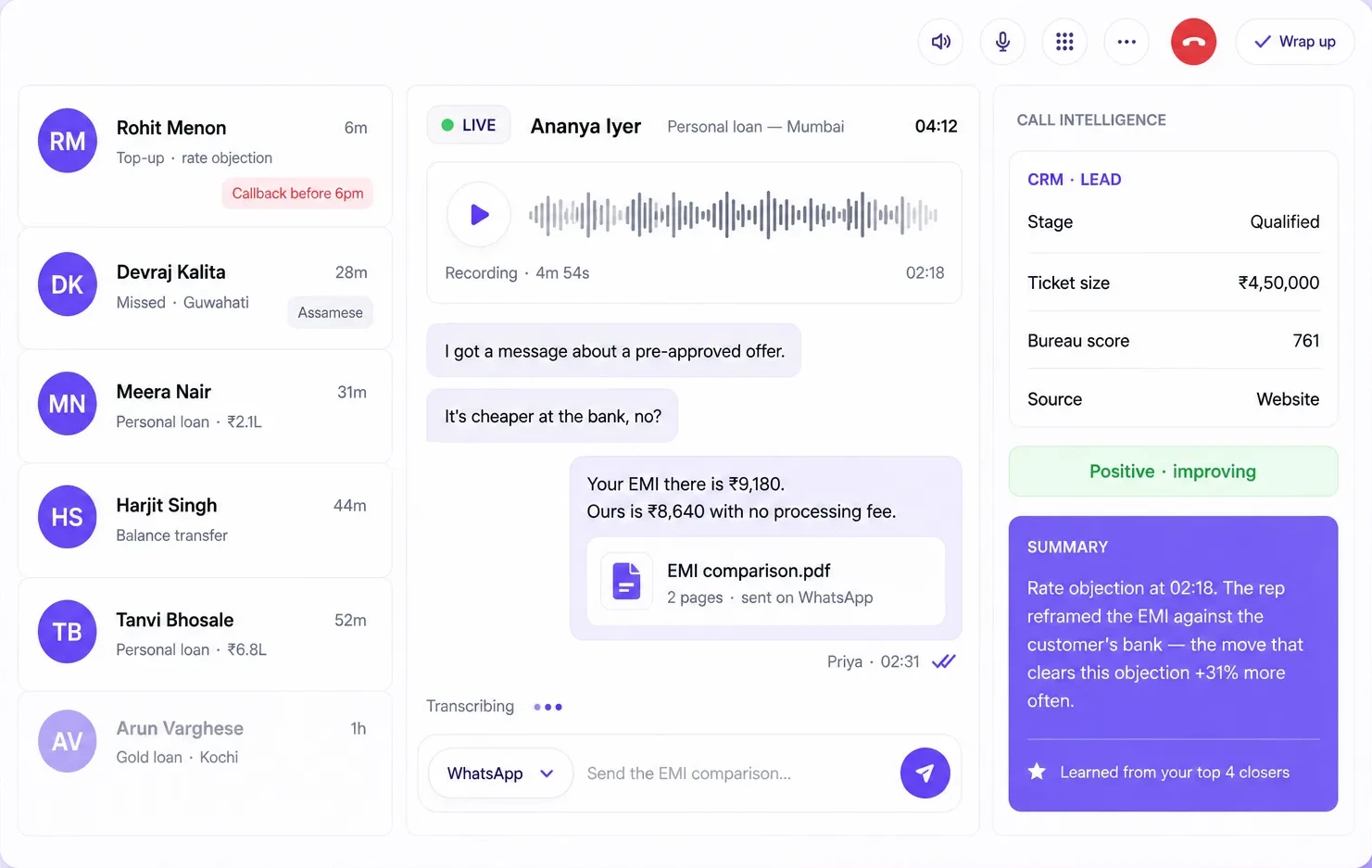
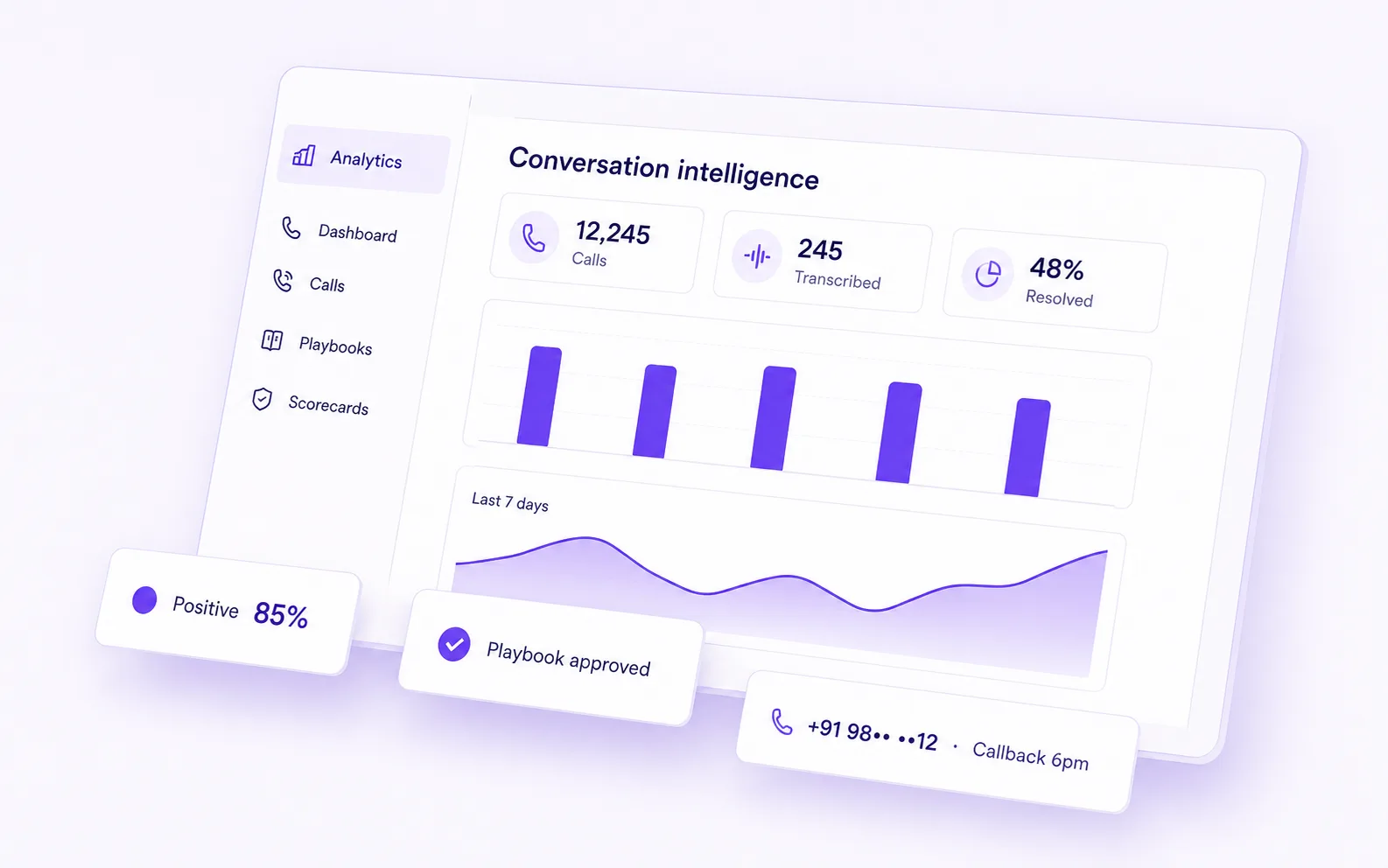
The agent has no general licence to talk. Every line it can say came from a play a manager read and approved, and a question outside that set becomes a handover rather than a guess. That is a design decision, not a setting somebody can turn off on a busy afternoon.
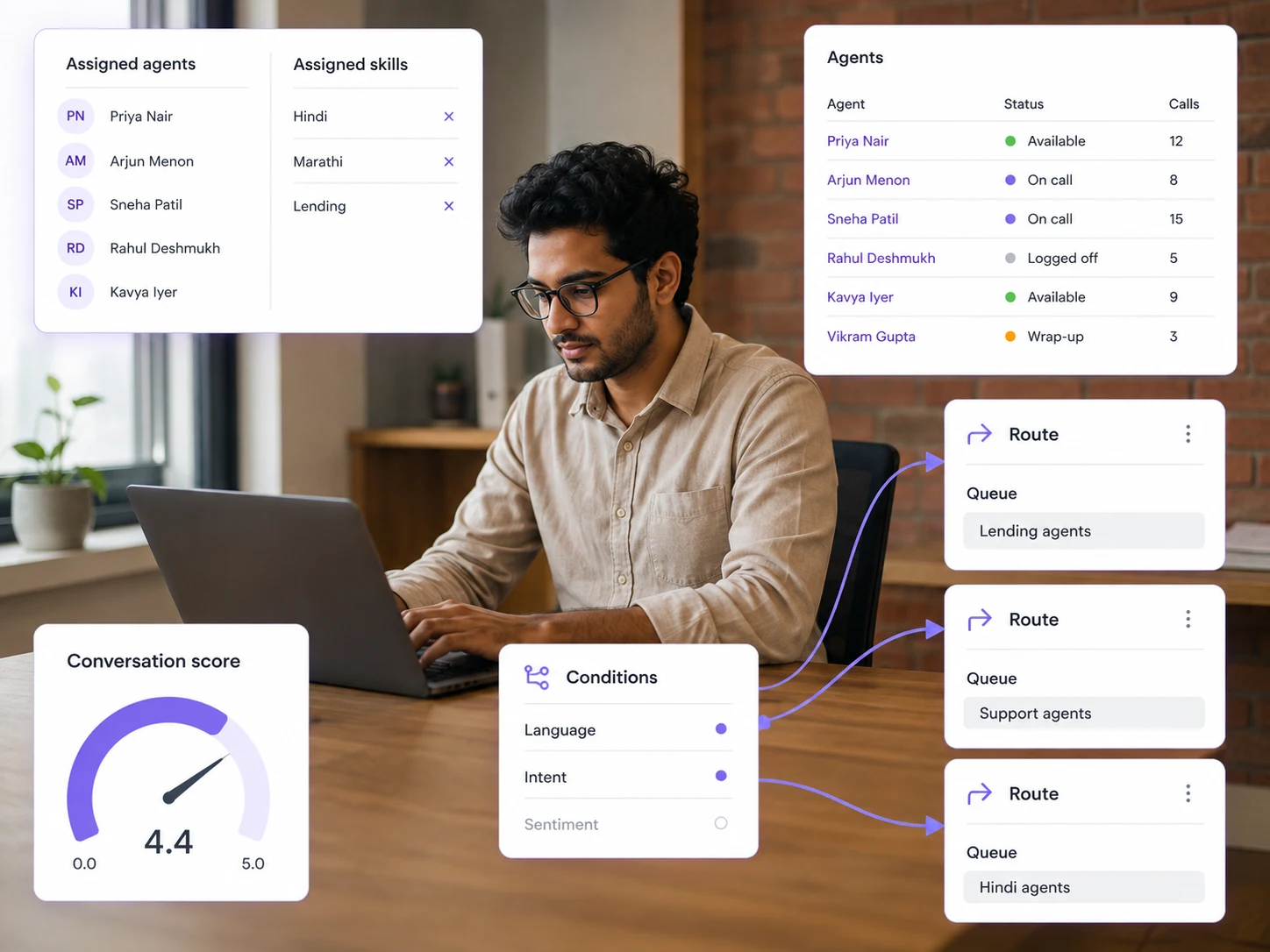
Overflow, out of hours, reminder runs and the third follow-up attempt: the volume that never justified headcount and quietly cost you pipeline every time it went unanswered.
The same loop the floor runs on. An agent is a playbook that answers the phone, so it goes through the same approval as one.
Plays are drawn from your own recordings rather than from a generic script.
A manager reads the diff and signs it off. Nothing runs before that happens.
The agent takes the calls you point at it, on your numbers and your routing.
Every call scored against the version that was live, with rollback in one click.
Bring one recorded call. We will show you the same conversation run by an agent on an approved play, and exactly where it hands over.
Yes, and it says so. Pretending otherwise is a compliance problem in several of the regions we operate in, and a trust problem in all of them.
It has no vocabulary outside the approved plays. Anything the playbook does not cover becomes a handover, so the failure mode is a transfer rather than an invention.
On complex intent, on a request for a person, on anything off-playbook, and on the escalation triggers you set. The rep receives the transcript and the context, not a cold transfer.
It takes the volume that never justified headcount — overflow, reminders, third attempts. Reps get the calls where a person changes the outcome, with live coaching on them.
Yes. Agents sit behind the same numbers and the same routing flows as your team, so switching one on is a routing change rather than a migration.
AI communication platform that connects your calls, learns what wins, and runs across your channels.
sales@hyperdial.io