
What is omnichannel? Meaning, examples and how it works
Omnichannel is a way of running customer communication in which every channel shares one customer record, so a conversation can move from a call to WhatsApp to email without the customer starting over.
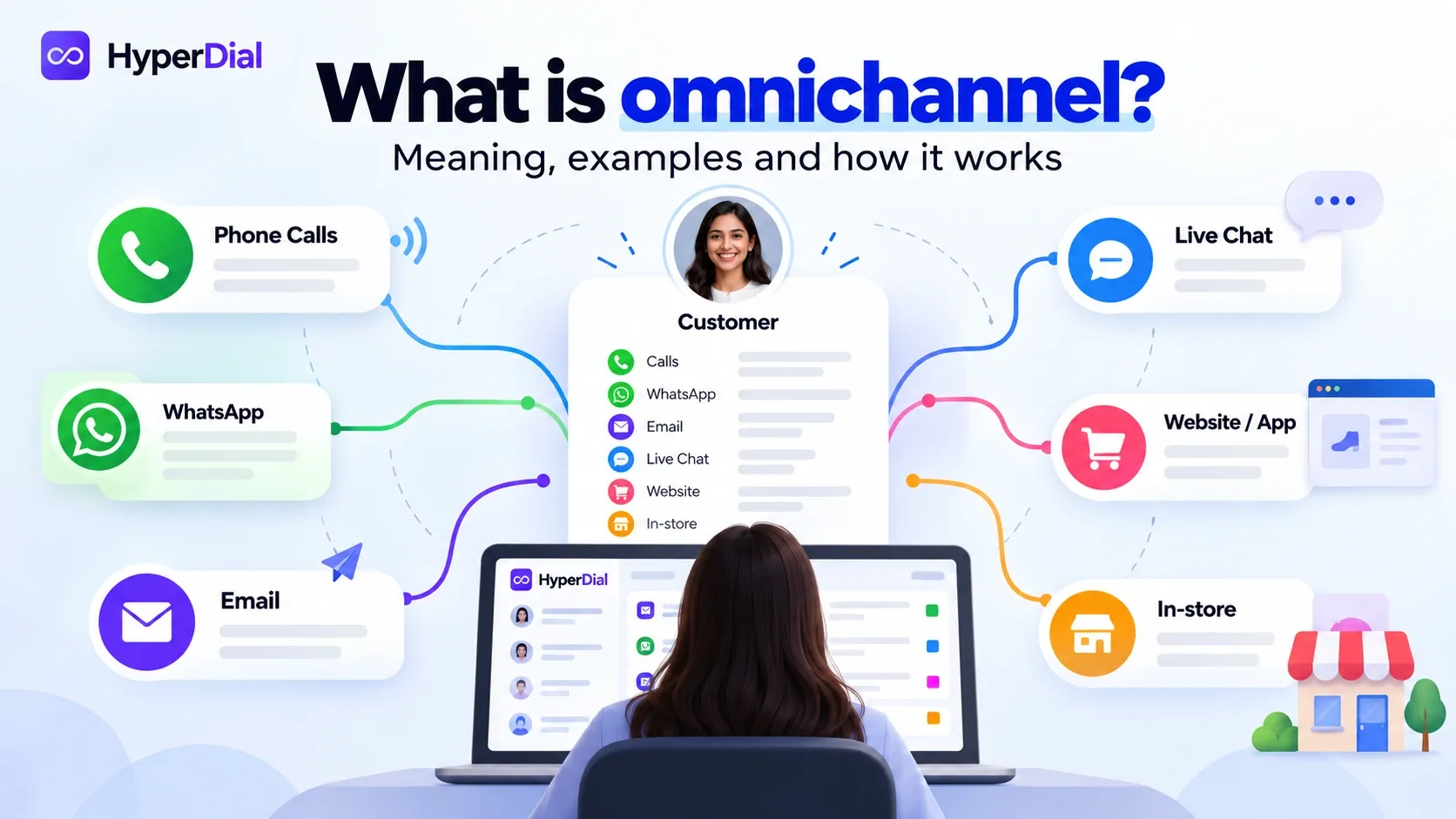
What is omnichannel?
Omnichannel is an approach to customer experience in which all of a business's channels work as one system, sharing the same customer history and context. The word combines "omni", Latin for "all", with "channel", the route a customer uses to reach a business.
Omnichannel started in retail, where it described a shopper moving between a website, an app and a store. It now covers every customer conversation, including sales calls and support. What makes a setup omnichannel is not the number of channels but whether they share memory.
In this blog you will find what is Omnichannel, how it works, where can you use it and what are the requirements to have Omnichannel
Three terms come up in every definition:
Channel
A channel is a route a customer uses to reach you, such as a phone call, WhatsApp message or SMS, email, web chat or a store visit. Each channel has its own habits: people call when something is urgent, message when they want a written record, and email when they need to send documents. Each one also has its own rules, such as the opt-in WhatsApp requires before a business can message someone. In an omnichannel setup the channel is only the way in; what matters is that every channel leads to the same customer history.
Touchpoint
A touchpoint is a single interaction on a channel, such as one call, one WhatsApp message or one email. A customer journey is made of many touchpoints across several channels: a missed call, a reminder text and a callback are three touchpoints in one conversation. Logging every touchpoint with its time, channel and outcome lets the next agent see what already happened. It also lets a manager spot where journeys stall, which is what call analytics is for.
Customer record
A customer record is the single history of every touchpoint with one customer, which every channel reads and writes to. It usually lives in the CRM, so a call logged by the phone system and a message logged by the inbox both land on the same contact. This record is what turns several channels into omnichannel: without it, each team sees only its own slice of the conversation, and the customer ends up repeating themselves. HyperDial keeps calls and messages on one thread per customer in its omnichannel inbox and syncs calls with CRMs such as Salesforce, HubSpot and Zoho.
How does omnichannel work?
Omnichannel works by putting every channel on top of one customer record, so any person or system answering sees what happened before. Three parts make that possible.
- One shared customer history: Every call, message and email is saved under the same customer, so anyone on your team can see the full story. Most teams keep this history in their CRM, such as Salesforce, HubSpot or Zoho.
- Calls and messages reach the right person:When a customer calls or messages, it goes straight to the right team or person, based on who they are and what they asked last time. This is done with call routing.
- The same answer on every channel: Customers get the same answers, offers and rules whether they call or type. Only the wording changes to suit the channel.
When these three are in place, a customer who messages on WhatsApp in the morning and calls in the afternoon reaches someone who already has the morning's message open.
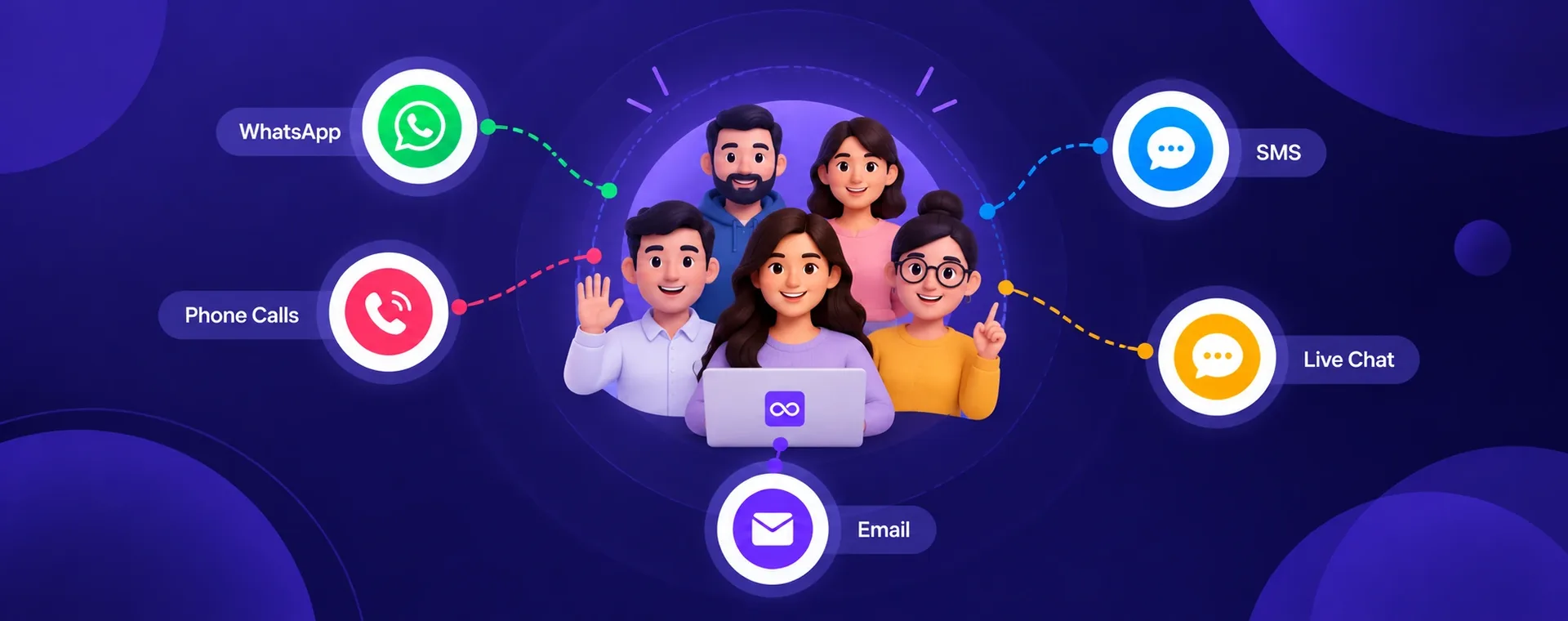
What is the difference between omnichannel and multichannel?
The difference between omnichannel and multichannel is shared context. Both offer several channels, but in multichannel each channel runs on its own system, while in omnichannel all channels read from one customer record.
Single channel, multichannel and omnichannel compared
| Criterion | Single channel | Multichannel | Omnichannel |
|---|---|---|---|
| Channels offered | One | Several | Several |
| Customer history | One channel only | Split by channel | Shared across all |
| Customer repeats details | Rarely | Often | No |
| Agent sees past messages | Same channel only | Same channel only | All channels |
| Reporting | One view | One report per channel | One view of the customer |
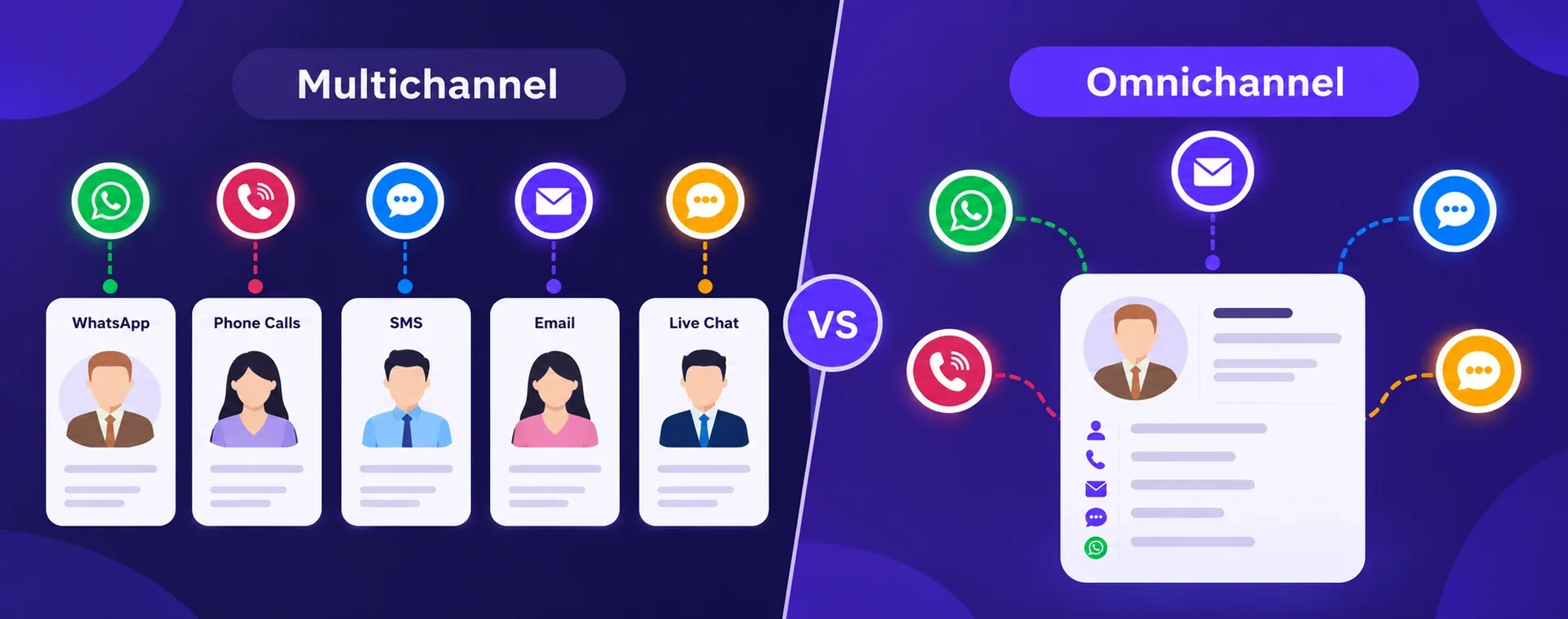
A business can add channels for years and stay multichannel. It becomes omnichannel only when the channels connect.
What is an example of omnichannel?
An omnichannel example is any customer journey that crosses channels without losing context. These three show it in sales, support and retail:
Support
A customer reports a late order on WhatsApp, then calls. The agent who answers sees the WhatsApp thread and the order beside the call, so the customer doesn't repeat the order number. This is how omnichannel support teams avoid asking for details twice.
WhatsApp ---> Call
Sales
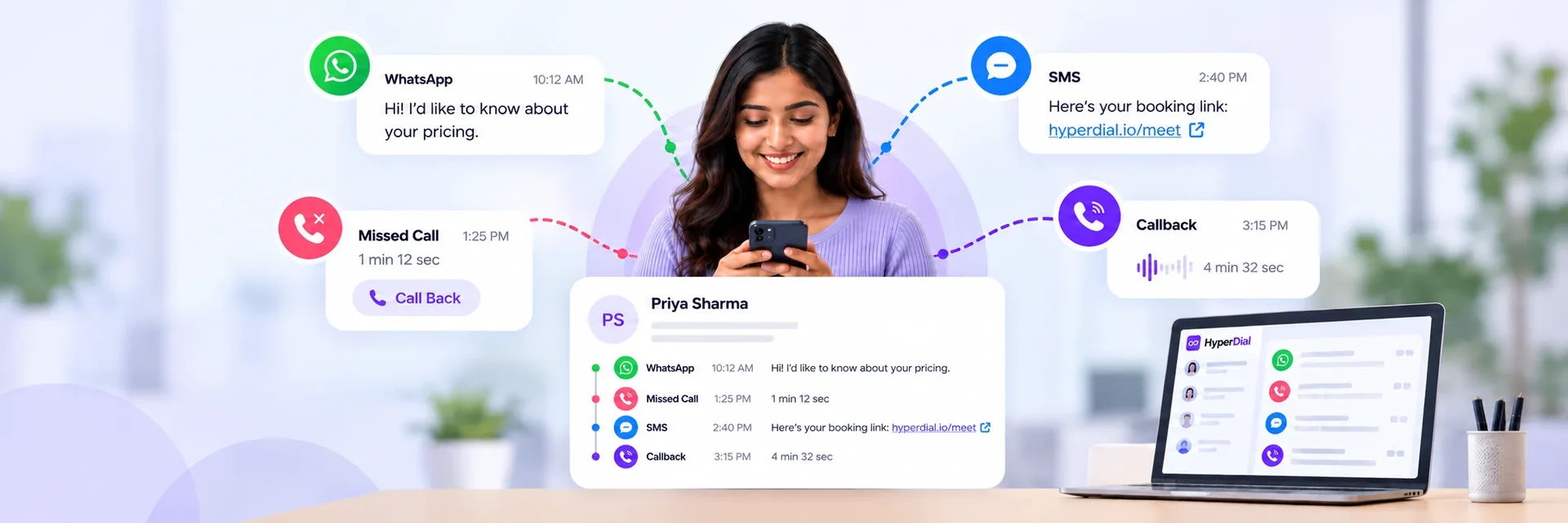
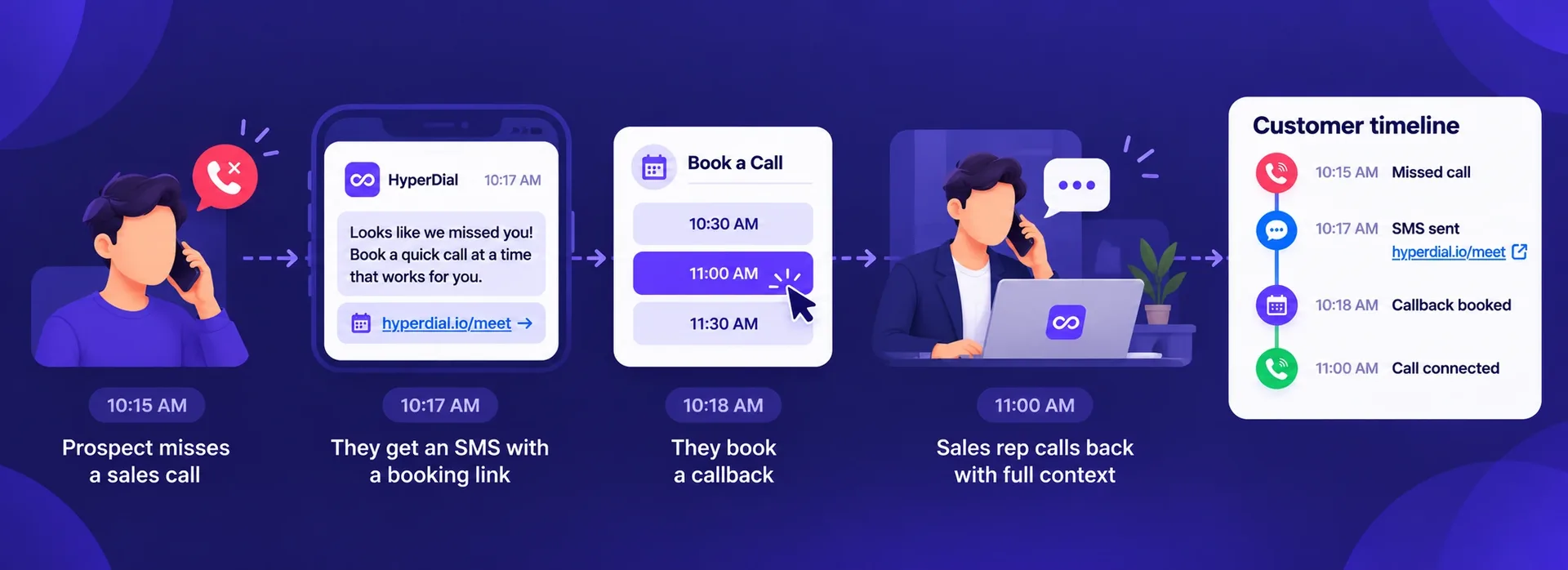
A prospect misses a sales call, gets an automatic SMS with a booking link and books a callback. The rep who calls back sees the missed call, the text and the booking in one timeline, which is the setup outbound sales teams rely on.
Missed call ----> SMS ----> Callback
Retail
A shopper adds a product to a cart online, gets an email reminder and buys it in a store. The store's system recognizes the order history and applies the same price.
Website ---> Email ----> Store
What is omnichannel marketing?
Omnichannel marketing is marketing that coordinates messages across channels using one view of each customer, so each message reflects what the customer has already seen or done. A customer who has just bought a product, for example, stops receiving ads for it on every channel at once.
Multichannel marketing, by contrast, runs separate campaigns per channel. The email team and the SMS team may each send the same offer, sometimes on the same day.
What is omnichannel retail?
Omnichannel retail is selling through stores, websites, apps and marketplaces that share stock, prices and customer history. Buy online and pick up in store is the most familiar example. The customer can start in one place and finish in another without the retailer treating them as two different people.
What is an omnichannel contact center?
An omnichannel contact center is a customer service or sales team that handles calls, messages, email and chat in one system, with one queue and one customer history. Agents switch channels without switching tools.
An omnichannel contact center typically includes:
- One inbox for every channel: Calls, WhatsApp, SMS, email and chat land in the same place.
- Routing across channels: IVR menus and queue rules send each contact to the right agent, whatever channel it arrives on.
- Context during the conversation: The agent sees the full history while the call or chat is live, not after it ends.
- Handover with history: When an AI voice agent or a colleague passes a conversation on, the transcript and context go with it.
Why does omnichannel matter?
Omnichannel matters because customers already use more than one channel, and a business that can't connect them makes customers do the work of repeating themselves. A Harvard Business Review study of 46,000 shoppers found that the more channels shoppers used, the more they spent.
For a sales or support team, the benefits are practical:
- Customers don't repeat themselves: the agent already has the history.
- Faster resolution: fewer questions are needed before the real answer.
- Better coaching: managers review a whole customer journey, not one channel's slice.
- Cleaner reporting: one view in call analytics shows which channels customers use and where conversations stall.
Does one consent cover every channel?
No, one consent does not cover every channel in an omnichannel setup. A conversation can be shared across channels, but permission to contact someone is granted channel by channel, and each channel has its own rules.
WhatsApp is a clear example. Meta's opt-in policy requires businesses to state that the person is opting in to WhatsApp messages and to name the business they are opting in to hear from. Consent to receive emails doesn't satisfy it.
In practice, an omnichannel customer record should store:
- Consent per channel: a separate yes or no for calls, SMS, WhatsApp and email.
- Where and when consent was given: the form, call or message that captured it.
- Opt-outs per channel: a customer who stops SMS may still want calls about an open order.
HyperDial's security and compliance overview covers how consent and call data are handled on the platform.
How do you build an omnichannel strategy?
An omnichannel strategy starts with the channels your customers already use, not with every channel available. These five steps take a team from separate channels to a connected setup:
- List the channels customers actually use. Pull a month of contacts by channel before adding anything new.
- Pick one customer record. Decide which system, usually the CRM, holds the history every channel reads.
- Connect each channel to that record. Log every call, message and email against the customer automatically. (Most setups go wrong here)
- Write one playbook for all channels. Agree on answers, offers and escalation rules, then adapt the wording per channel.
- Measure the whole journey. Track first contact resolution and customer satisfaction (CSAT) across channels, not channel by channel.
The most common failure happens at step 3: channels get added to the same screen but still log to separate histories, which looks omnichannel and works like multichannel.
How can you tell if your setup is omnichannel?
You can tell if your setup is omnichannel by checking whether context survives a channel switch. Answer these five questions about your own team:
- Can an agent on a call see the customer's last WhatsApp or SMS message?
- If a customer emails and then calls, does the call land with someone who has the email open?
- Does one report show a single customer's contacts across every channel?
- When a bot or AI agent hands over to a person, does the transcript go with it?
- Is consent stored per channel on the same customer record?
0 of 5Tick each question your setup can answer yes to.
Five yes answers means the setup is omnichannel. Any no shows exactly where it is still multichannel.
How do you choose omnichannel software?
| Choose a helpdesk with chat and email | if most contacts are written and calls are rare. |
| Choose an omnichannel contact center platform | if calls are a large share of contacts and agents switch between voice and messaging. |
| Choose a platform with WhatsApp and SMS built in | if customers in your market message more than they email. |
HyperDial fits the last two cases. HyperDial's omnichannel inbox keeps voice, WhatsApp, SMS, email, web chat and social messages on one thread per customer, with order context beside the conversation. Voice calls carry recording, transcription and live coaching into the same thread, and routing and IVR send each contact to the right queue. Templates and consent follow each channel's rules. One cost to know: the platform fee is per user, while carrier and Meta messaging fees are billed separately at cost, as the pricing page explains.


